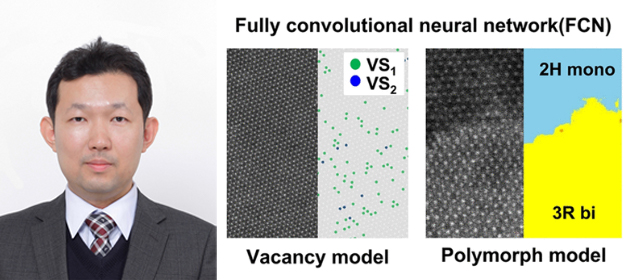
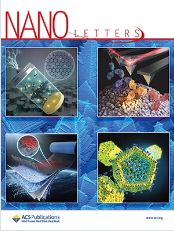
연세대 물리학과 김관표 교수 연구팀은 딥러닝 기반 인공지능을 적용해 전자현미경 이미지 분석 방법의 효율성과 정확성을 획기적으로 향상시킬수 있는 방법론을 개발했다. 연구팀이 개발한 인공지능을 통해 전문가들이 수십 분 동안 분석해야 하는 데이터를 초 당 수백장 이상 분석할 수 있게 됐다. 분석 정확도 또한 전문가 정확도를 상회하는 수준으로 확보했다.
한편 기초과학연구원 나노의학 연구단의 지원을 통해 수행된 해당 연구 결과는 나노 분야 세계적 학술지 '나노 레터스'(Nano Letters)에 지난 8일 게재됐다.
Biweekly Progress Meeting (BPM) 6/27 Mon 09:00 Nanomaterials Group 7/4 Mon 08:30 Bio Group
Study Group Meeting (SGM) Tue 11:00 NMI / 16:30 MRB Wed 13:00 MG / 15:00 MNA Thu 12:00 SCSI / 15:00 TEM Fri 09:00 MBA / 10:30 N-TEC
Upcoming Events
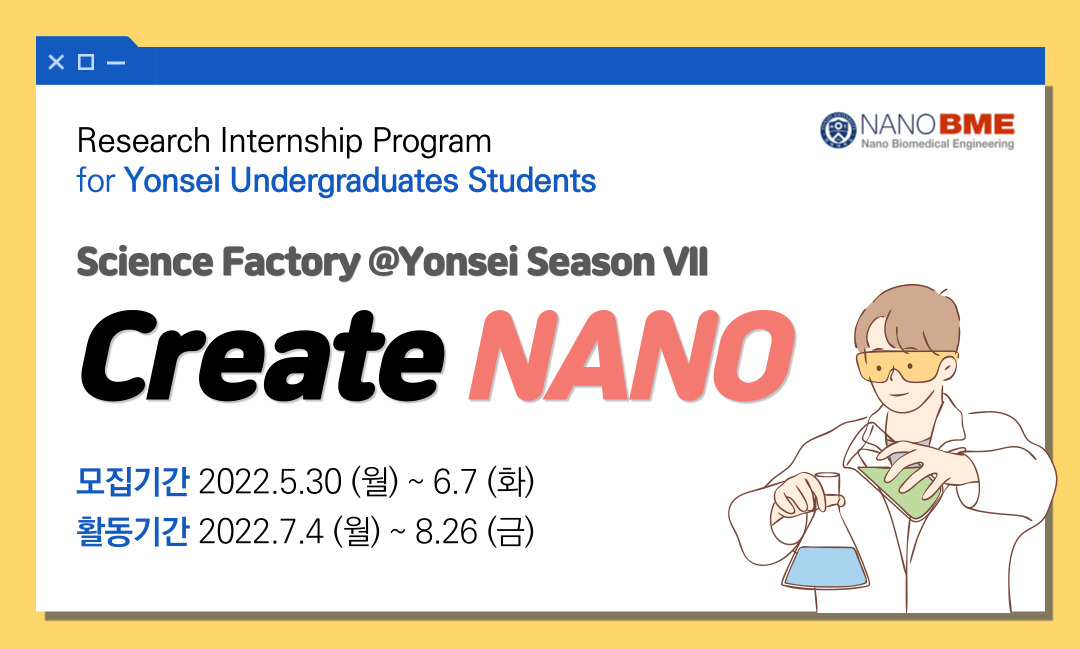
Science Factory @Yonsei Season VII "Create Nano" Orientation
프로그램명: Science Factory @Yonsei 시즌 7 "Create Nano"
오리엔테이션 일정: 2022.7.4 (월) 14:00 ~ 18:00
IBS CNM's Campaign
A Sip of Inspiration
Advanced Healthcare Materials
“Magnetism-Optogenetic” System for Wireless and Highly Sensitive Neuromodulation
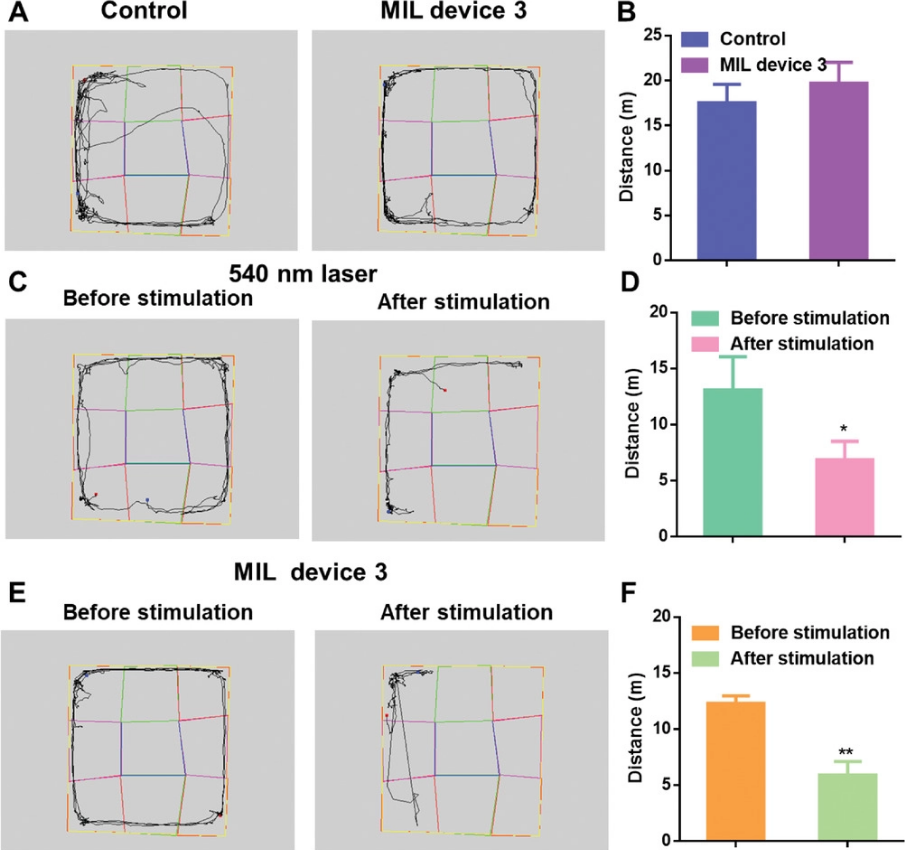
In this paper, a “magnetism-optogenetic” system is constructed, which uses a magnetic field to drive mechanoluminescent materials (ZnS:Cu) to generate light, thus stimulating photogenetic proteins. This system effectively combines the wireless magnetic regulation with the high sensitivity of optogenetics. The results show that the luminous intensity of this system changes with the power of an external ma-
gnetic field. In addition, under the continuous stimulation of the wireless magnetic field, this system can activate hippocampal-related neural responses and induce the expression of C-fos. In the end, this system can further regulate the movement behavior of rats with C1V1 protein expression in the primary motor cortex. This new magnetism-optogenetic system will provide an excellent reference for wireless and highly sensitive neuromodulation.
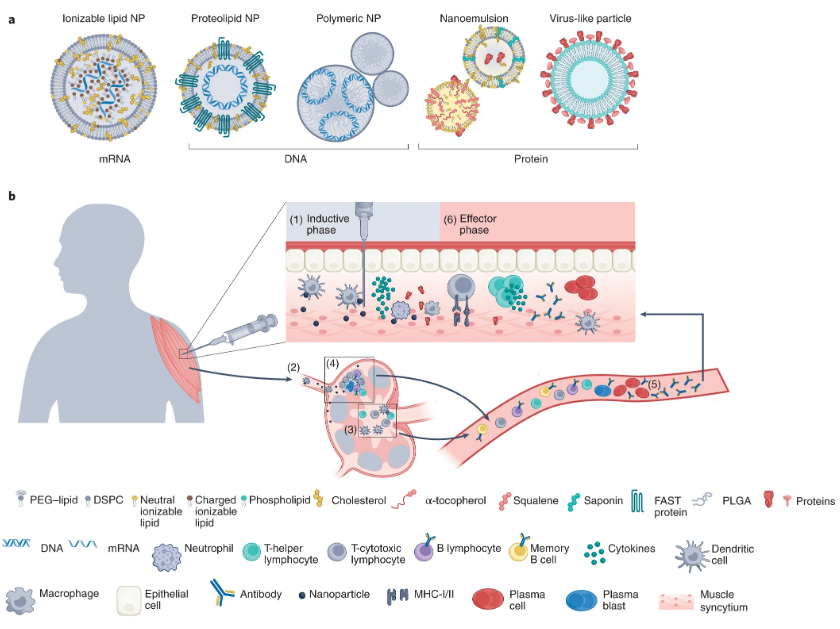
Characterization of nanoparticles-based vaccines for COVID-19
Several vaccines against COVID-19 use nanoparticles to protect the antigen cargo (either proteins or nucleic acids), increase the immunogenicity and ultimately the efficacy. The characterization of these nanomedicines is challenging due to their intrinsic complexity and requires the use of multidisciplinary techniques and
competencies. The accurate characterization of nanovaccines can be conceptualized as a combination of physicochemical, immunological and toxicological assays. This will help to address key challenges in the preclinical characterization, will guide the rapid development of safe and effective vaccines for current and future health crises, and will streamline the regulatory process.