IBS CNM Monthly Newsletter
연세대학교 나노의학연구단 뉴스레터
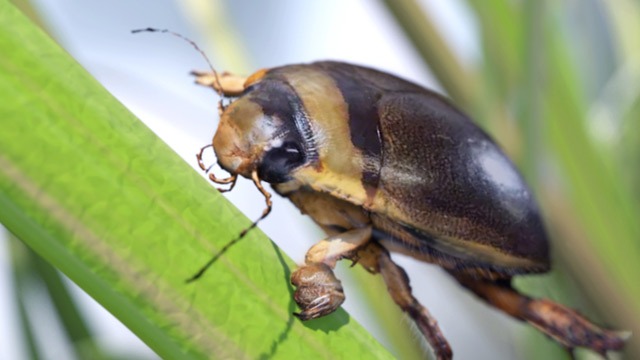
Beetle-Inspired Smart Device for Personalized Skin Care Technology Networks Drawing inspiration from nature, a team of international scientists have invented a smart device for personalized skin care modeled after the male diving beetle. This tool collects and monitors body fluids while sticking to the skin’s surface, paving the way for more accurate diagnostics and treatment for skin diseases and conditions like acne. "Diving beetle–like miniaturized plungers with reversible, rapid biofluid capturing for machine learning–based care of skin disease" by Seung-Woo Cho, and Changhyun Pang was published in Science Advances. The authors acknowledge support from the Institute for Basic Science. Homepage Re-design  기초과학 교육과 혁신적 과학 연구라는 두 가지 목적을 동시에 지향하는 고등과학원은 나노의학연구단과 대학원 과정인 나노바이오메디컬엔지니어링 전공으로 구성되어 있습니다. 두 조직의 강점과 혁신성을 효과적으로 소개하기 위해 홈페이지 개편을 진행하였습니다. NanoBME 전공 신입생 모집  연세대학교 NanoBME 전공은 21세기 가장 주목받는 과학분야인 나노과학과 바이오메디컬 엔지니어링을 융합한 국내 유일의 대학원 과정입니다. 세계적 수준의 연구를 선도할 수 있는 역량과 경험을 지닌 최정상 인재를 양성하는 NanoBME 전공에서 2022년 전기 신입생을 모집합니다. Recruiting Research Meeting Schedule
A Sip of Inspiration Institute for Basic Science (IBS) Highly conductive and elastic nanomembrane for skin electronics 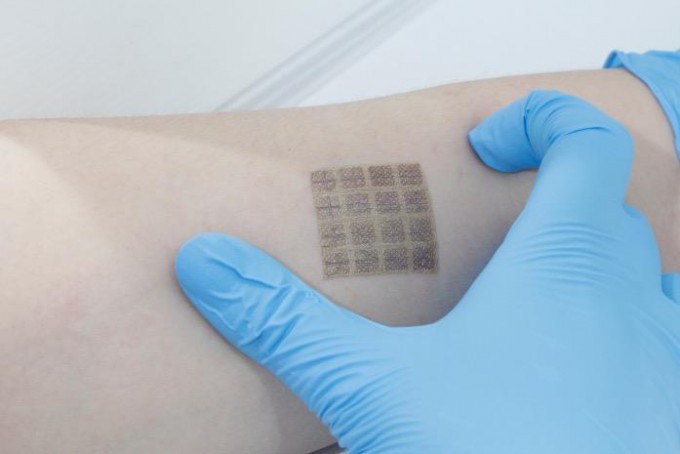 “Skin electronics” are thin flexible electronics that could be mounted onto the skin. While it may sound like something out of science fiction, it is anticipated that soon such devices can serve as next-generation devices with a wide range of applications such as health monitoring, health diagnosis, virtual reality, and human-machine interface. University of Cambridge Nano ‘camera’ made using molecular glue allows real-time monitoring of chemical reactions 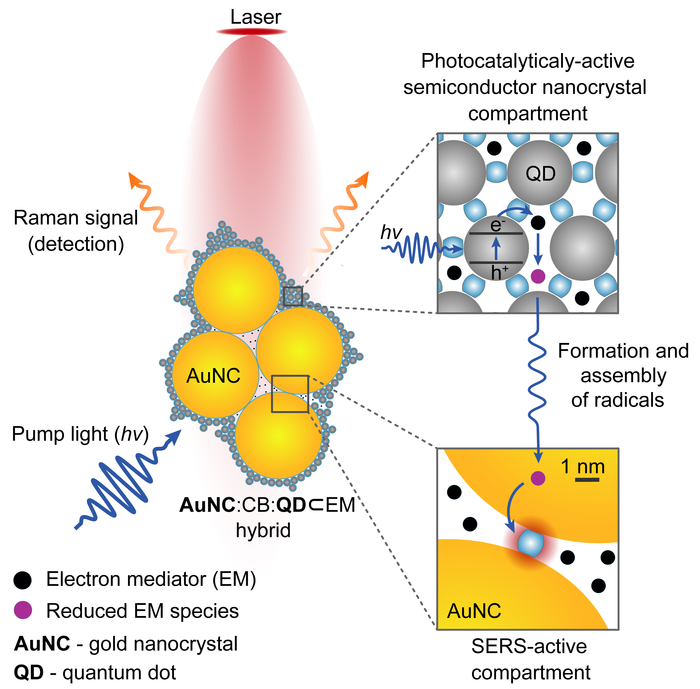 Researchers have made a tiny camera, held together with ‘molecular glue’ that allows them to observe chemical reactions in real time. The device, made by a team from the University of Cambridge, combines tiny semiconductor nanocrystals called quantum dots and gold nanoparticles using molecular glue called cucurbituril (CB). When added to water with the molecule to be studied, the components self-assemble in seconds into a stable, powerful tool that allows the real-time monitoring of chemical reactions. Stanford University A mini-CRISPR system could be 'Swiss knife' in gene editing 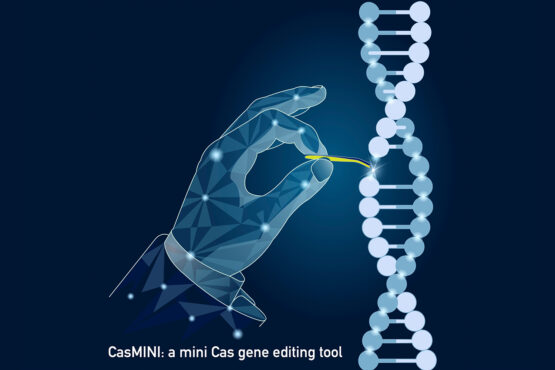 Stanford researchers have engineered a new miniature CRISPR system that should be easier to deliver into human cells, tissues, and the body for gene therapy. The findings appear in a study publishing September 3 in the journal Molecular Cell.
IBS Center for NanoMedicine at Yonsei University ibs@yonsei.ac.kr IBS Hall 50 Yonsei-ro, Seodaemun-gu, Seoul 03722, South Korea |
IBS CNM 안에서 벌어진 과학과 사람 이야기, 한 달치 모아봤어요📬